This comprehensive guide details the proper wear and appearance of the enlisted Army Class B uniform, ensuring adherence to current Army uniform regulations.
Understanding correct setup promotes discipline, unit cohesion, and compliance with Army Regulation 670-1, the governing document for all Army uniforms.
This resource covers male and female variations, insignia placement, grooming standards, and maintenance procedures for the Class B uniform.
The Army Class B uniform represents a significant step down in formality from the Class A uniform, yet maintains a professional and respectable appearance for Soldiers. Often referred to as the “duty uniform,” it’s commonly worn for daily tasks, staff meetings, and official functions where a more relaxed, yet presentable, image is desired.
Historically, variations of the Class B uniform have existed for decades, evolving alongside changes in Army regulations and standards. Today’s iteration, governed by Army Regulation 670-1, emphasizes a neat and standardized appearance across the force. It’s crucial to understand that while offering more flexibility than the Class A, the Class B uniform still demands strict adherence to established guidelines regarding fit, wear, and insignia placement.
Proper wear of the Class B uniform reflects discipline, pride, and attention to detail – qualities fundamental to Army values. This guide will provide a detailed overview of all components and regulations, ensuring Soldiers present a professional and authorized appearance at all times.
Historical Context of the Class B Uniform
The evolution of the Army’s Class B uniform mirrors the broader changes within the Army itself. Early iterations, dating back to the early 20th century, were largely practical work uniforms adapted for everyday wear. Post-World War II, a more standardized approach emerged, with distinctions between dress and work uniforms becoming clearer.
Throughout the latter half of the 20th century, the uniform underwent several modifications, reflecting shifts in fabric technology, design preferences, and Army regulations. The introduction of the Army Green Service Uniform (AGSU) and the subsequent optional wear of insignia on the Class B, as outlined in recent ALARACT messages, demonstrate this ongoing evolution.
The current Class B uniform represents a balance between tradition and practicality, acknowledging the Army’s heritage while adapting to modern needs. Understanding this historical context provides valuable insight into the reasoning behind current regulations and the importance of maintaining a professional appearance.
Army Regulation 670-1: The Governing Document
Army Regulation (AR) 670-1 serves as the definitive guide for all aspects of Army uniforms and appearance. This regulation meticulously details authorized clothing items, proper wear, insignia placement, and grooming standards for all Soldiers, encompassing both the Army Green Service Uniform (AGSU) and the Class B uniform.
AR 670-1 is regularly updated to reflect changes in policy, technology, and Army standards. Soldiers are responsible for staying current with the latest revisions, as adherence to the regulation is paramount. Department of the Army Pamphlet 670-1 provides supplementary guidance and visual aids to assist in understanding the regulation’s requirements.
Compliance with AR 670-1 isn’t merely about appearance; it reflects discipline, professionalism, and respect for the Army’s traditions. It’s the foundational document for ensuring a cohesive and standardized appearance across the force.

Components of the Class B Uniform ⎯ Male
The male Class B uniform consists of a coat, trousers, shirt, and tie, each requiring a proper fit and condition for a professional appearance.
Coat – Proper Fit and Condition
The Army Class B coat must present a neat and professional appearance, reflecting discipline and attention to detail. Proper fit is paramount; the coat should comfortably accommodate authorized undergarments without appearing overly tight or loose.
Shoulder seams should lie flat, and the coat’s length should cover the seat of the pants. Ensure the coat is free from wrinkles, stains, tears, or excessive wear. Buttons must be securely attached and polished to a high sheen.
Inspect the coat regularly for damage and replace it if necessary. The coat’s color must conform to Army Regulation 670-1 standards, maintaining a consistent and authorized shade. Maintaining a well-kept coat is crucial for upholding the Army’s standards.
Trousers – Cut, Length, and Adjustments
Class B trousers should have a proper, conservative cut, avoiding excessively tight or baggy fits. The trousers’ length is critical; a slight break – a minimal crease – is permitted at the shoe, ensuring a neat and professional appearance. Avoid trousers that bunch or stack at the ankles.
Adjustments, such as hemming, must be performed professionally to maintain the trousers’ original appearance and shape. The waistband should be adjusted to fit comfortably without a belt, though a belt may be worn if necessary.
Inspect trousers for wear, tears, or stains, replacing them if they no longer meet Army Regulation 670-1 standards. Maintaining a clean and well-fitted trouser is essential for a sharp uniform.
Shirt – Color, Style, and Wear
The Class B uniform requires a long-sleeved, light blue shirt for enlisted personnel. The shirt must be of the correct shade and style as prescribed by Army Regulation 670-1. Sleeves are typically worn down, unless duty requirements dictate otherwise, and should fit properly at the shoulders and wrists.
Ensure the shirt is clean, pressed, and free of stains or tears. Buttons must be securely fastened, and the collar should be neatly worn. Undershirts, if worn, must be plain white or black and not visible through the shirt.
Regular inspection and proper care are vital to maintain a professional appearance and adhere to uniform standards.
Tie – Color, Knot, and Length
The necktie worn with the Army Class B uniform must be black, four-in-hand knot is standard, and it should reach the top of the belt buckle. A properly tied tie demonstrates attention to detail and adherence to Army Regulation 670-1 standards.
The tie’s material should be a conservative style, avoiding overly bold patterns or colors. Ensure the tie is clean, pressed, and free from wrinkles or damage. The knot should be snug but not overly tight, allowing for comfortable breathing.
Consistent inspection of tie length and knot quality is crucial for maintaining a professional and polished appearance.
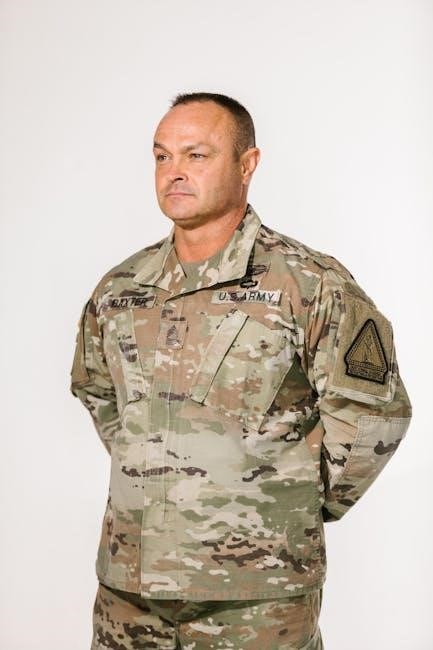
Components of the Class B Uniform ⎼ Female
Female Soldiers have options including a coat/blouse, trousers/slacks, or a skirt, adhering to specified length and style guidelines outlined in Army regulations.
Coat/Blouse – Fit and Style Options
The Army Class B coat or blouse for female Soldiers must present a professional and neat appearance, reflecting discipline and attention to detail. Proper fit is paramount; the coat should comfortably accommodate authorized undergarments without appearing overly tight or loose. Shoulder seams should lie flat, and the sleeves should reach the wrist bone when the arm is naturally extended.
Style options generally include a tailored coat for a more formal look or a blouse designed for wear with skirts or trousers. The blouse, when worn, must be tucked neatly into the trousers or skirt. Buttons must be securely fastened, and any alterations should maintain the uniform’s original appearance and not compromise its integrity. Refer to Army Regulation 670-1 for specific guidance on acceptable alterations and fit standards, ensuring compliance with official Army uniform regulations.
Trousers/Slacks – Proper Fit
For female Soldiers, trousers or slacks worn with the Class B uniform must adhere to strict fit standards outlined in Army Regulation 670-1. The trousers should be properly hemmed, with a slight break—a minimal crease—over the shoe. Avoid excessively tight or baggy fits; the trousers should maintain a professional silhouette.
The waistband should sit comfortably at the natural waistline without requiring a belt, although a belt may be worn if desired. Trousers must be free of excessive wrinkles or alterations that deviate from the original design. Ensure the length allows for comfortable movement while maintaining a neat and polished appearance. Proper fit is crucial for projecting a professional image and demonstrating adherence to Army uniform regulations.
Skirt – Length and Style Guidelines
Female Soldiers opting to wear a skirt with the Class B uniform must adhere to specific length and style guidelines detailed in Army Regulation 670-1. The skirt’s length should reach approximately one inch above the knee, ensuring modesty and a professional appearance. A-line or pencil skirts are generally authorized, but any embellishments or deviations from standard styles are prohibited.
The skirt must fit properly at the waistline without being excessively tight or loose. Hosiery is required when wearing a skirt, and the color should be conservative – typically nude or black. Avoid skirts with slits or revealing cuts. Maintaining the correct length and style demonstrates respect for Army uniform regulations and contributes to a polished, professional image.
Blouse – Wear with Skirt or Trousers
Female Soldiers have the option of wearing a blouse with either trousers or a skirt as part of the Class B uniform. The blouse must be properly fitted, allowing for comfortable movement without appearing baggy or overly tight. It should be tucked neatly into the trousers or skirt, maintaining a professional silhouette. The collar must be fully buttoned, and sleeves are typically worn down, unless specific circumstances permit otherwise.
The blouse color should conform to Army Regulation 670-1 standards. When worn with a skirt, a conservative slip or undergarment is recommended for modesty and comfort. Ensuring the blouse is clean, pressed, and properly worn contributes significantly to the overall neatness and professionalism of the uniform, reflecting positively on the Soldier and the Army.
Insignia and Accoutrements
Proper placement of rank insignia, DUIs, name tapes, and ribbons is crucial for a correct uniform appearance, adhering to Army regulations and standards.
Rank Insignia – Placement and Type
Enlisted personnel display rank insignia on the collar, centered and affixed securely. The specific insignia varies based on pay grade, ranging from specialist to sergeant major. Shoulder loops are not used for rank display on the Class B uniform; collar insignia is the sole method.
Non-commissioned officers (NCOs) wear chevrons indicating their rank, while warrant officers utilize warrant officer insignia. Ensure insignia is clean, properly aligned, and free from damage. Replacement of lost or damaged insignia is the Soldier’s responsibility.
Correct placement is vital; insignia should not be crooked or overlapping. Refer to Army Regulation 670-1 for detailed guidance on specific insignia types and authorized wear. Improper wear can result in corrective action. Maintaining a professional appearance reflects discipline and pride in service.
Distinctive Unit Insignia (DUI) – Attachment and Regulations
Distinctive Unit Insignias (DUIs) are worn on the right breast pocket flap of the Class B uniform, centered and approximately ¼ inch from the pocket’s edge. They signify a Soldier’s affiliation with a specific unit. DUIs must be securely attached, typically with clutch retainers, ensuring they remain firmly in place during wear.
Only authorized DUIs may be worn, as dictated by a Soldier’s assigned unit. Wearing an incorrect DUI is a violation of Army Regulation 670-1. Ensure the DUI is clean and free from excessive wear or damage. Replacement is the Soldier’s responsibility.
DUIs should be flush with the pocket flap and properly aligned. Proper wear demonstrates unit pride and adherence to established Army standards.
Name Tape and US Army Tape – Placement and Specifications
Name tapes and “US Army” tapes are essential components of the Class B uniform, indicating a Soldier’s identity and service. The name tape, embroidered with the Soldier’s last name, is positioned above the right breast pocket, centered and 1/2 inch from the pocket’s top edge.
The “US Army” tape is placed identically above the left breast pocket. Both tapes must be securely attached, utilizing appropriate stitching or Velcro backing, ensuring a neat and professional appearance. Proper alignment and spacing are crucial for maintaining Army standards;
Tapes should be clean, undamaged, and conform to the specifications outlined in Army Regulation 670-1.
Ribbon Rack – Order of Precedence and Mounting
Ribbon racks display a Soldier’s earned decorations and awards, demanding precise order of precedence and correct mounting techniques on the Class B uniform. Ribbons are arranged according to a specific hierarchy, prioritizing combat awards, then meritorious awards, followed by service and training ribbons, as detailed in Army Regulation 670-1.
The rack is centered on the left breast, just above the name tape. Ribbons are mounted on a ribbon bar, ensuring they lie flat and are properly spaced – typically 1/8 inch between each ribbon.
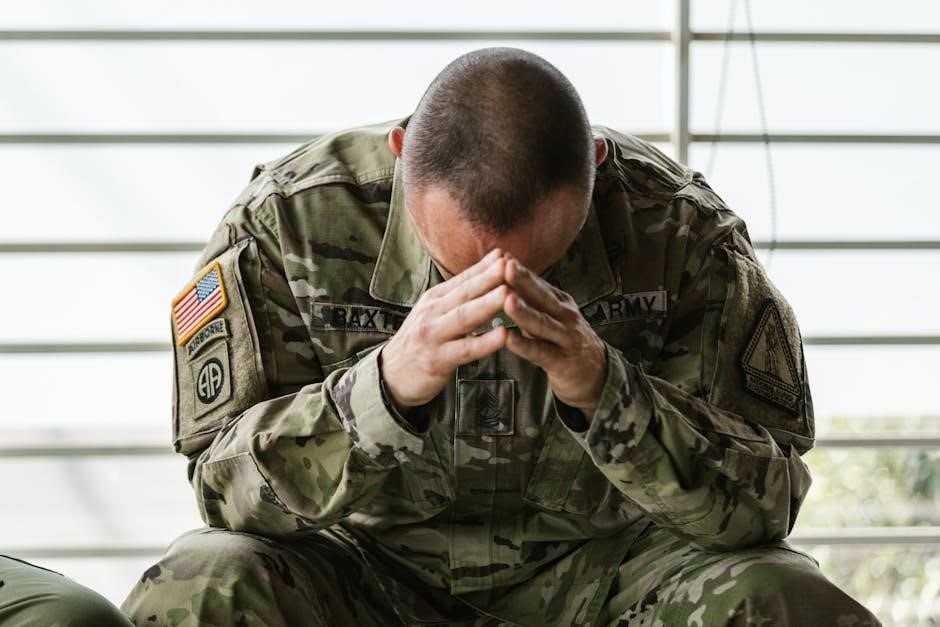
All ribbons must be clean, unfrayed, and securely affixed. Proper presentation reflects pride and adherence to Army standards.
Military Awards – Placement and Regulations
Military awards, beyond ribbons, require specific placement and adherence to regulations outlined in Army Regulation 670-1 on the Class B uniform. Full-size medals are authorized for wear on formal occasions, while miniature medals are typically worn for everyday duty.
Placement follows a prescribed order of precedence, similar to ribbon racks, prioritizing combat awards. Medals are worn suspended from the appropriate ribbon, and spacing is crucial for a neat appearance.
Badges, such as qualification or identification badges, are positioned above the ribbons and awards. Proper wear demonstrates respect for earned honors and reflects a commitment to Army standards.
Grooming Standards and Accessories
Maintaining professional appearance is vital; grooming standards, covering hair, jewelry, and shoes, are detailed in Army Regulation 670-1 for the Class B uniform.
Hair Standards – Regulations for Male and Female Soldiers
Hair standards, as outlined in Army Regulation 670-1, are crucial for maintaining a professional military appearance within the Class B uniform. For male Soldiers, hair must be neatly groomed, tapered, and present a professional appearance; sideburns are permitted, but must be neatly trimmed.
Excessively long, bulky, or unconventional hairstyles are prohibited. Female Soldiers have more flexibility, but hair must also be neatly arranged and not interfere with wearing headgear.
Authorized hairstyles include braids, cornrows, and twists, provided they are neat and do not exceed a certain length or width.
Hair color must be natural; unnatural colors are not permitted.
Both male and female Soldiers are expected to maintain a clean and well-groomed appearance, adhering to the spirit and intent of the regulation.
Jewelry – Permitted and Prohibited Items
Army Regulation 670-1 dictates strict guidelines regarding jewelry worn with the Class B uniform, ensuring a professional and standardized appearance. Modest jewelry is permitted, but must not be excessive or detract from the uniform’s overall neatness.
For both male and female Soldiers, wedding rings are generally authorized, but other rings are limited to a single, modest band.
Necklaces are permitted, but must be worn under the shirt and not be visible.
Earrings are restricted to small, conservative styles; male Soldiers are typically limited to stud or small loop earrings.
Visible body piercings, beyond earrings, are generally prohibited.
Bracelets are allowed, but must be subdued in color and design. Excessive or distracting jewelry is not authorized, maintaining military bearing.
Shoes – Style, Polish, and Condition
Army Regulation 670-1 specifies that appropriate footwear is crucial for a professional appearance with the Class B uniform. Black, lace-up dress shoes are standard for both male and female Soldiers. Oxfords or similar styles are generally accepted, but athletic shoes, boots, or sandals are prohibited.
Shoes must be polished to a high gloss shine, free from scuffs, scratches, and excessive wear. Regular polishing is essential to maintain this standard. The soles should be in good condition, with minimal wear and tear.
Heels for female Soldiers must be conservative in height and style.
Socks must be black and worn at all times. Visible sock patterns or designs are not permitted. Maintaining clean and well-maintained shoes demonstrates attention to detail and respect for uniform standards.

Inspection and Maintenance
Regular self-inspections and proper uniform care are vital for maintaining a professional appearance and ensuring compliance with Army regulations.
Consistent cleaning and diligent upkeep extend the uniform’s lifespan and reflect pride in service.
Self-Inspection Checklist
Prior to wear, a thorough self-inspection is crucial. Begin by examining the coat and trousers for cleanliness, proper fit, and any signs of wear or damage – rips, tears, or missing buttons. Verify all insignia are securely attached and correctly positioned, including rank, DUI, and name/US Army tapes.
Inspect the shirt for stains, wrinkles, and proper collar alignment. Ensure the tie is correctly knotted, of appropriate length, and free from blemishes. Check shoes for cleanliness, polish, and heel condition. Finally, confirm adherence to grooming standards – hair neatly styled, jewelry authorized, and overall appearance professional.
Utilize a checklist to systematically review each component, ensuring complete compliance with Army Regulation 670-1. Addressing deficiencies proactively demonstrates attention to detail and respect for uniform standards.
Uniform Cleaning and Care
Proper cleaning and care extend the life of your Class B uniform and maintain a professional appearance. Always follow garment care label instructions. Dry cleaning is recommended for the coat to preserve its shape and finish. Trousers and shirts can typically be machine washed on a gentle cycle with cold water.
Avoid harsh detergents or bleach, as these can damage the fabric and fade colors. Hang uniforms to dry, avoiding direct sunlight. Iron as needed, using the appropriate heat setting for the fabric. Regularly inspect for loose buttons or seams and repair them promptly.
Consistent care demonstrates pride and professionalism, ensuring your uniform always reflects the high standards of the U.S. Army.