Ackley’s Nursing Diagnosis Handbook, an evidence-based guide to planning care, is a convenient resource for both students and practicing nurses seeking streamlined care plan development.
This handbook utilizes a three-step system, offering evidence-based interventions and rationales, ultimately improving patient outcomes and reducing documentation time.
Overview of the Handbook’s Purpose
Ackley’s Nursing Diagnosis Handbook serves as a practical, evidence-based resource designed to simplify and enhance the process of creating effective care plans. Its core purpose is to guide nurses – both students and experienced professionals – through the complexities of patient care by providing a clear, concise, and research-supported approach.
The handbook aims to facilitate accurate nursing diagnoses, informed intervention selection, and ultimately, improved patient outcomes. It’s built upon the principle of linking assessment findings directly to appropriate diagnoses and interventions, ensuring a holistic and individualized care experience.
This resource empowers nurses to confidently “get nursing care plans right!”
Target Audience: Students and Practicing Nurses
Ackley’s Nursing Diagnosis Handbook is intentionally crafted to meet the needs of two distinct, yet interconnected, groups: nursing students and practicing nurses. For students, it provides a foundational understanding of the evidence-based process of care plan development, offering a structured learning tool to master essential skills.
Practicing nurses benefit from its quick-reference format and readily available, research-backed interventions, streamlining workflow and reducing time spent on documentation. The handbook serves as a valuable resource for both novice and experienced clinicians seeking to enhance their practice.
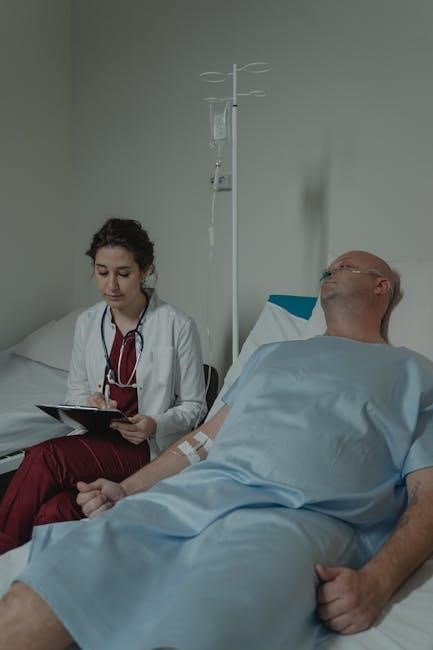
The Evidence-Based Approach
Ackley’s Handbook champions an evidence-based approach, integrating current research findings into nursing interventions and rationales for optimal patient care planning.
Importance of Evidence-Based Practice in Nursing
Evidence-based practice is crucial in nursing, ensuring interventions are grounded in research and yield the best possible patient outcomes. Ackley’s Handbook directly supports this by providing rationales linked to research studies.
This approach moves nursing away from tradition and towards scientifically validated methods, promoting accountability and continuous improvement in patient care. Utilizing research minimizes risks and maximizes effectiveness.
The handbook empowers nurses to make informed decisions, enhancing the quality of care delivered and fostering a culture of inquiry within clinical settings.
How the Handbook Integrates Research Findings
Ackley’s Nursing Diagnosis Handbook seamlessly integrates research findings by providing evidence-based interventions alongside detailed rationales. Each intervention is directly linked to supporting research studies, allowing nurses to understand the scientific basis for their actions.
This isn’t simply listing interventions; it’s presenting a clear connection between clinical practice and the latest evidence. The handbook acts as a bridge, translating complex research into practical, bedside application.
This feature promotes critical thinking and informed decision-making, vital for optimal patient care.
Utilizing Research Studies for Interventions
Ackley’s Nursing Diagnosis Handbook doesn’t just mention research; it actively facilitates its use in intervention selection. Evidence-based interventions are consistently supported by citations, directing nurses to the original research studies for deeper understanding.
This allows for verification of the evidence and encourages nurses to stay current with evolving best practices. By providing access to the source material, the handbook empowers nurses to critically evaluate and adapt interventions.
Ultimately, this strengthens the foundation of patient care.

Understanding the Three-Step System
Ackley’s Handbook employs an easy, three-step system to guide users through assessment, diagnosis, and planning phases for effective, patient-centered care.
Assessment Phase: Data Collection and Analysis
Ackley’s Nursing Diagnosis Handbook emphasizes a thorough assessment as the foundation of care. This crucial first step involves systematic data collection, encompassing subjective experiences and objective findings.
The handbook guides nurses to correlate nursing diagnoses with existing client information gathered during assessment.
Effective analysis of this data is paramount, allowing for the identification of patterns and deviations from the norm, ultimately leading to accurate diagnosis and individualized care planning.
This phase sets the stage for evidence-based interventions.
Diagnosis Phase: Identifying Nursing Diagnoses
Following a comprehensive assessment, Ackley’s Nursing Diagnosis Handbook facilitates accurate identification of appropriate nursing diagnoses. The handbook provides a well-organized list, aiding in selecting diagnoses that precisely reflect the patient’s health status.
This phase moves beyond simply recognizing symptoms to defining the patient’s response to actual or potential health problems.
Utilizing an evidence-based approach, the handbook ensures diagnoses are grounded in research and clinical expertise, forming the core of effective care planning.
Planning Phase: Developing Care Plans
The Planning Phase, guided by Ackley’s Nursing Diagnosis Handbook, focuses on creating individualized care plans. The handbook offers evidence-based interventions with clear rationales, linking actions directly to research findings.
Care plan templates provide a starting point, allowing for customization based on unique patient needs and preferences.
This systematic approach streamlines development, ensuring interventions are targeted, measurable, and contribute to improved patient outcomes, while also reducing time spent on documentation.

Key Features and Components
Ackley’s Handbook boasts a comprehensive nursing diagnosis list, evidence-based interventions, and rationales, alongside customizable care plan templates for efficient planning.
Nursing Diagnosis List and Organization
Ackley’s Nursing Diagnosis Handbook presents a meticulously organized list of nursing diagnoses, facilitating quick and accurate identification of patient needs.
The handbook’s structure allows for easy navigation, enabling nurses to efficiently locate relevant diagnoses based on presenting symptoms and assessment findings.
This systematic approach ensures a comprehensive and standardized method for planning care, promoting consistency and quality in patient management. The diagnoses are presented in a logical format, enhancing usability.
It’s a key component of the evidence-based approach.
Evidence-Based Interventions and Rationales
Ackley’s Nursing Diagnosis Handbook distinguishes itself through its commitment to evidence-based practice, providing meticulously researched interventions for each nursing diagnosis.
Each intervention is accompanied by a clear rationale, directly linking it to supporting research studies and clinical evidence.
This feature empowers nurses to confidently implement interventions, knowing they are grounded in the best available evidence, ultimately enhancing patient safety and improving outcomes.
It’s a crucial aspect of planning care effectively.
Care Plan Templates and Customization
Ackley’s Nursing Diagnosis Handbook enhances efficiency with readily available care plan templates, serving as a strong foundation for individualized patient care.
These templates aren’t rigid; they are designed for easy customization, allowing nurses to adapt interventions to meet the unique needs of each patient.
The Evolve website further supports this, offering additional resources to refine and personalize care plans, ensuring a holistic and effective approach to planning care.
This flexibility is invaluable in clinical practice.

Utilizing the Evolve Website Resources
The Evolve website complements Ackley’s Handbook with valuable resources like case studies, review questions, and care plan templates, supporting effective planning care.
Case Studies for Application
Ackley’s Nursing Diagnosis Handbook enhances learning through realistic case studies available on the Evolve website. These scenarios allow students and practicing nurses to apply evidence-based interventions to diverse patient situations.
Each case presents complex clinical challenges, prompting critical thinking and the development of individualized care plans. By working through these examples, users solidify their understanding of correlating assessment findings with appropriate nursing diagnoses.
The handbook and Evolve resources together provide a powerful tool for mastering planning care and improving patient outcomes.
Review Questions for Knowledge Assessment
Ackley’s Nursing Diagnosis Handbook supports learning with comprehensive review questions hosted on the Evolve website. These questions are designed to assess comprehension of key concepts related to evidence-based practice and nursing diagnosis.
The questions cover a range of topics, including assessment, diagnosis formulation, and planning care, reinforcing the three-step system presented in the handbook.
Self-testing with these resources helps users identify areas needing further study and solidify their understanding of effective patient care strategies.
Additional Online Resources and Support
Beyond the handbook itself, the Evolve website provides extensive supplementary materials for Ackley’s Nursing Diagnosis Handbook. Users gain access to valuable online resources designed to enhance understanding and application of evidence-based practice.
These resources include detailed care plan templates, allowing for customization, and a wealth of support materials to aid in effective planning care.
This comprehensive support system ensures users have everything needed to confidently implement nursing diagnoses in clinical settings.
Comparing Different Editions
The 12th Edition of Ackley’s handbook features significant changes and updates, building upon previous editions to provide the most current evidence-based guidance.
Amazon offers both new and used copies for comparison, with pricing varying based on condition and seller.
Changes and Updates in the 12th Edition
Ackley’s Nursing Diagnosis Handbook’s 12th Edition delivers substantial enhancements, reflecting the latest advancements in evidence-based practice and contemporary nursing care. Updates encompass new and revised nursing diagnoses, aligning with current classification systems.
The handbook incorporates recent research findings, strengthening the rationales for interventions and ensuring alignment with best practices. Expanded coverage of mental health applications and refined care plan templates further enhance its utility.
Evolve resources are also updated, offering new case studies and review questions to facilitate learning and application.
Review of Previous Editions
Prior editions of Ackley’s Nursing Diagnosis Handbook consistently received praise for its clear, concise presentation of complex nursing concepts. Users lauded the handbook’s practical approach, particularly the three-step system for care plan development, streamlining workflows and improving efficiency.
Many nurses found the evidence-based interventions and rationales invaluable, supporting informed clinical decision-making. While highly regarded, previous editions prompted requests for expanded mental health coverage and updated research integration—addressed in the current 12th edition.
Availability and Pricing on Amazon
Ackley’s Nursing Diagnosis Handbook: An Evidence-Based Guide to Planning Care (12th Edition) is readily available for purchase on Amazon. As of today, December 12, 2025, multiple options exist, including new and used copies.
Compare pricing from various sellers; options range from approximately $35 to $60, depending on condition and seller. Full content is visible with a double tap for detailed information. Amazon offers convenient shipping and customer service for this essential nursing resource.

Practical Applications in Clinical Settings
This handbook streamlines care plan development, improves patient outcomes, and significantly reduces the time nurses spend on documentation in busy clinical environments.
Streamlining Care Plan Development
Ackley’s Nursing Diagnosis Handbook dramatically simplifies the often-complex process of creating effective care plans. By providing pre-written, evidence-based interventions and clear rationales, nurses can quickly and efficiently address patient needs.
The handbook eliminates the need for extensive research, allowing clinicians to focus more on direct patient care. This resource offers a practical, step-by-step approach, ensuring comprehensive and individualized plans.
It’s a valuable tool for both novice and experienced nurses, promoting consistency and quality in patient care delivery.
Improving Patient Outcomes
Ackley’s Nursing Diagnosis Handbook directly contributes to enhanced patient outcomes through its focus on evidence-based practice. Utilizing research-supported interventions ensures that care plans are aligned with the most effective strategies for specific diagnoses.
By consistently applying these proven methods, nurses can optimize patient responses to treatment and promote faster recovery.
The handbook facilitates a standardized, high-quality approach to care, minimizing variations and maximizing the potential for positive patient results, ultimately leading to better health and well-being.
Reducing Time Spent on Documentation
Ackley’s Nursing Diagnosis Handbook significantly reduces the time nurses spend on documentation by providing pre-written, evidence-based interventions and rationales. This eliminates the need for extensive research and writing of care plans from scratch.
The convenient format and readily available information streamline the planning process, allowing nurses to focus more on direct patient care.
With readily accessible resources, nurses can efficiently complete documentation, ensuring accurate and timely records while maximizing their time with patients.

The Role of Nursing Diagnoses in Patient Care
Ackley’s Handbook correlates nursing diagnoses with assessment findings, offering a basis for classification and treatment alternatives, including applications within mental health care.
Correlation with Assessment Findings
Ackley’s Nursing Diagnosis Handbook expertly demonstrates how to connect identified nursing diagnoses directly to the information gathered during comprehensive patient assessments.
This crucial link ensures interventions are targeted and relevant, moving beyond generalized care plans. The handbook facilitates a logical flow from observed data – both subjective and objective – to a precise diagnostic statement.
By grounding care in concrete assessment findings, nurses can justify interventions and accurately evaluate patient responses, ultimately enhancing the quality of care delivered;
Classification and Treatment Alternatives
Ackley’s Nursing Diagnosis Handbook doesn’t simply present diagnoses; it explores a spectrum of potential treatment options, acknowledging the individuality of each patient’s needs.
The handbook provides a foundation for considering diverse approaches, moving beyond standardized protocols. It supports nurses in critically evaluating interventions and selecting those most appropriate based on patient-specific factors.
This resource aids in collaborative care, fostering informed discussions with physicians and other healthcare professionals to optimize treatment plans and achieve positive patient outcomes.
Mental Health Applications of the Handbook
Ackley’s Nursing Diagnosis Handbook extends its utility beyond physical health, offering valuable support for mental health nursing practice. A consortium of psychologists and psychiatrists developed evidence-based alternatives to traditional diagnostic tools.
The handbook facilitates accurate assessment and diagnosis of mental health conditions, guiding nurses in developing targeted care plans. It provides evidence-based interventions specifically tailored to address psychological and emotional needs.
This resource empowers nurses to deliver holistic, patient-centered care within the mental health setting.